
I'm Not Sure Who Made the Videos
Field notes on a propaganda category that has no propagandist - Giuseppe De Lauri 2026
“He who controls the spice controls the universe.”
— Baron Vladimir Harkonnen, Dune (Frank Herbert, 1965)
"Who controls the memes controls the universe."
— Elon Musk, on X, 24 June 2020
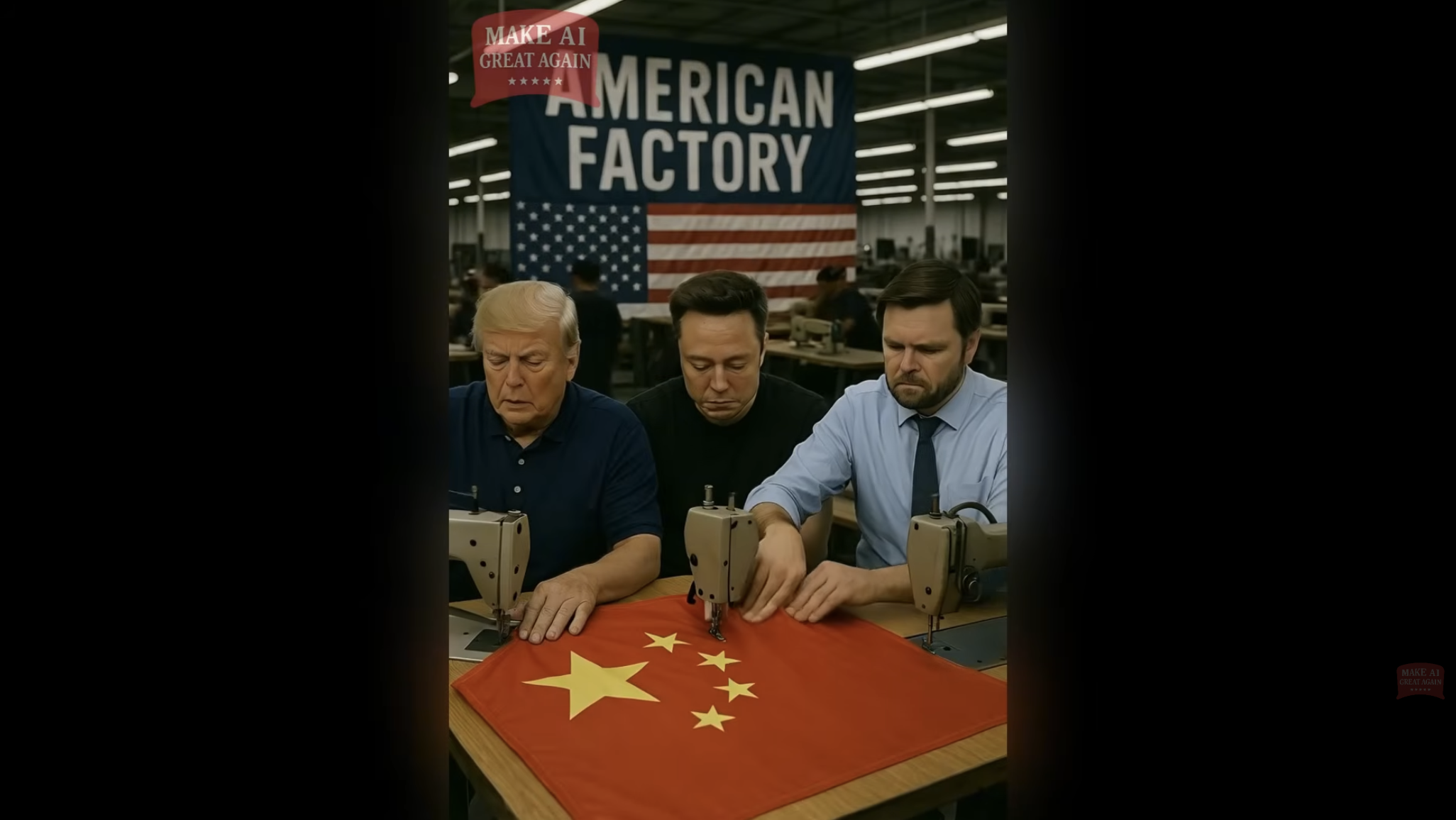
It is 15 April 2025, the James S. Brady Press Briefing Room, and a reporter the transcript names only as Deanna asks White House Press Secretary Karoline Leavitt about a batch of videos. Chinese officials, she says, have been posting AI-generated clips of Trump, J.D. Vance, and Elon Musk working in factories, gluing together Nike shoes and iPhones. Has the White House seen them. Does it have a response. Notice that the attribution is already inside the question: the reporter has handed Leavitt the culprit and is inviting her to confirm.
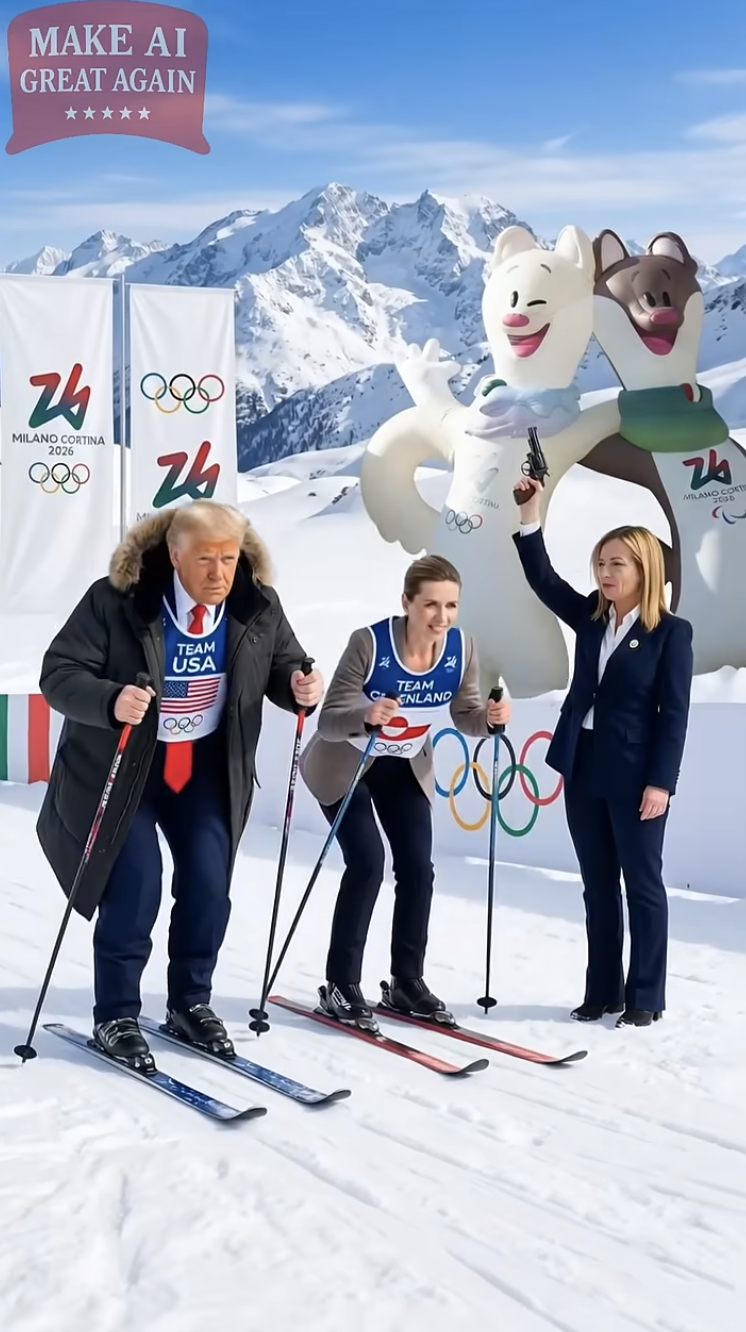
She doesn't. "I have seen the videos. I'm not sure who made the videos or if we can verify the authenticity. But whoever made it clearly does not see the potential of the American worker." On the record, in the most institutionally serious venue she has, the Press Secretary declined to attribute. The next day Newsweek ran "White House Reacts to Chinese AI Memes Making Fun of Trump and Vance," and the non-answer had become an attribution. Six weeks after that, a YouTube channel called Make AI Great Again would put a link to that same briefing on its About page and frame the moment as a federal endorsement. The description, with two typos that have never been corrected in any archived snapshot since, reads: "No. 1 AI Political Satire channel on YouTube, offically recoginzed by the White House."
I came to that channel as a filmmaker, seven years making images and the last four inside the generative AI stack, expecting to find a propaganda operation. What I found was stranger, and more important. The content does everything propaganda does. It repeats a narrative, it normalizes a sentiment, it moves at the scale and speed only generative tools allow. It has been watched 2.2 billion times. But it openly labels itself AI. It calls itself comedy. And after weeks of verification work, I cannot name the person or the state behind it. The thing that makes it dangerous is not that it hides. It is that it has nothing to hide.
That is the gap I want to walk you through. There is a name for the broad category now, slopaganda, coined in a 2025 paper I will get to, and it is the right name. The Make AI Great Again cluster fits it. But the cluster also does two things the definition does not yet account for. The first is the thing Leavitt could not do at the podium: it cannot be attributed. The second is the reason it gets away with it. It presents as satire, and satire is the one form a Western country will not police. Comedy is protected speech, an AI label protects it twice over, and a joke has no thesis you can fact-check. So the chassis runs hardest exactly where the rules are freest. It goes viral, it gets the laughs, and laugh by laugh it sets a common sentiment about a subject while no one ever has to argue for one. The propaganda is everywhere in the effect. The propagandist is missing from the picture. This is a field report on what that looks like, how I traced it, and why the apparatus built to catch this kind of thing saw nothing.
The chassis declares itself
Make AI Great Again is not unique. It is the cleanest version of a chassis now appearing in at least three formats across three powers, and each of the other three has a propagandist you can name.
Russia, the satire chassis. Zvezda TV, run by the Russian Ministry of Defence, airs deepfake sketches of Western leaders fronted by an AI avatar, each episode stamped with a disclaimer that it was generated by neural networks for parody. The propagandist is not hidden, it is broadcasting, and the disclaimer is not an apology, it is design: it tells you in plain language that nothing here will register on schemas built to find pretenders.
China, the documentary chassis. CGTN, China Central Television's international arm, produces an AI-generated series called A Fractured America, unwatchable inside China because YouTube is blocked there. The audience is non-domestic by design. Same chassis, documentary costume.
The United States, the meme chassis. Since early 2025 the official White House and Homeland Security accounts have posted AI content of Trump as king, as pope, as Superman, the Trump Gaza video, the DHS alligators in ICE caps. Here the state itself is the operator, the format is meme, and no one is pretending otherwise.
What the three share is that they defeat the framework by telling the truth. Each is declared, each is openly synthetic, each frames itself as parody, documentary, or just a meme. The apparatus built to find hidden, covert, deceptive operations finds nothing to attack, because nothing is hidden. And Make AI Great Again, on the same chassis with no identified operator at all, gets the same protection for free.
Propaganda without a propagandist
Run the cluster against the canon and the gap shows cleanly. Every framework that defines propaganda by its effect returns the same verdict: Ellul's normalization, Chomsky's structural filters, DiResta's amplification, Stanley's closing-off of debate, all of them call this propaganda. The only two that say no are the oldest and the newest, Bernays in 1928 and the 2025 slopaganda paper, and they fail for the same reason across a century: both require an identifiable actor with intent, and there isn't one.
So I would name the extension. Propaganda-effect without propaganda-actor. It is propaganda by every test that measures the effect, and not-yet-propaganda by the two that demand a culprit. The category exists, it operates at industrial scale, and it runs inside a chassis that is opaque by design. The point is not that Bernays or Klincewicz are wrong. It is that the academic frameworks, and the threat-intelligence apparatus that operationalizes them, are built for actors, and this chassis works without one.
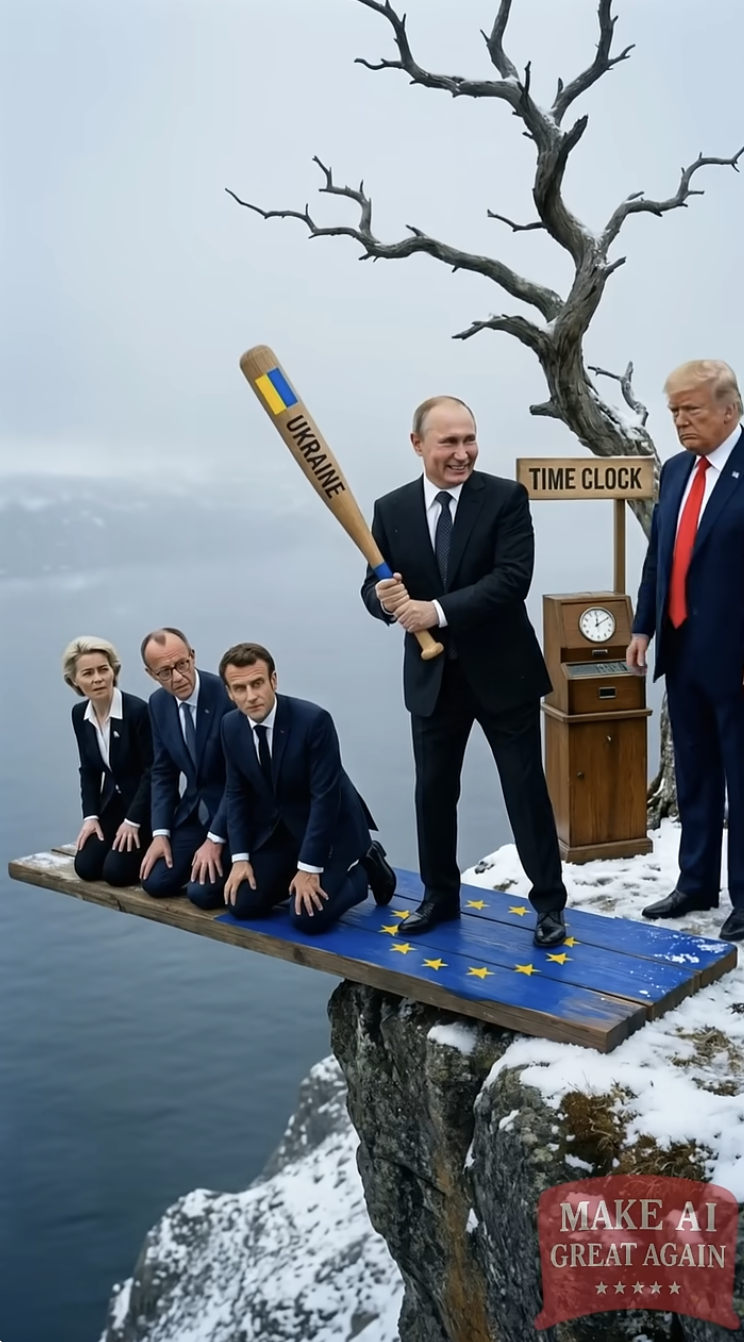
Three features hold it together. The first is that the dormant-rebrand is not a one-off but a documented and growing tactic, fed by an account marketplace that supplies aged, already-trusted handles to anyone who wants to skip the cold start. The second is dual-audience optimization. The signature video, Putin and Kim laughing at a US military parade, works in both directions: a US-aligned viewer laughs at Putin and Kim, a Russia-aligned viewer laughs at the US military, both share, both lift the channel. The 2.2 billion views are not one large audience, they are many small ones each finding its own bias confirmed by the same clip. That is why the cluster is not reducible to Chinese or Russian or American propaganda. It is dual-audience by construction. The third is the platform asymmetry it grows in. Western platforms are open and legally bound to protect satirical speech, especially when AI-labeled, so they could enforce but will not, and the capacity to enforce has been withdrawn: the Stanford Internet Observatory dismantled, the academic tracking tools retired, moderation budgets cut against the AI capex line, and Russian state media now grown three orders of magnitude inside LLM training data in a single year. Eastern platforms run under censorship that strips satire of their own regimes and lets satire of the West travel. The asymmetry is not a flaw in the chassis. It is the soil, and the soil is getting deeper.
What the word covers
The name arrived in March 2025, in an arXiv paper called Slopaganda by Klincewicz, Alfano and Fard. They defined it as unwanted AI-generated content spread in order to manipulate beliefs and other attitudes to achieve political ends. A portmanteau, propaganda plus slop, slop being Merriam-Webster's word of the year.
What separates it from the propaganda we already knew is scale, scope, and speed. Scale, because a generative pipeline produces thousands of artifacts a day with almost no human time. Scope, because the same artifact can be personalized to opposed audiences at automated cost. Speed, because it circulates inside a system engineered to maximize engagement at the rate of attention itself. And what separates it from the deepfake is that it does not need to deceive. A deepfake fails the moment you know it is fake. Slopaganda does not. It can carry an AI label and still do its job, which is not to convince you of a fact but to attach a sentiment, repeat it, and let the association set, even when the viewer knows the content is fake.
Most of the documented campaigns, the ones Graphika and the Atlantic Council's Digital Forensic Research Lab track, still pretend. They present as news, as commentary, as eyewitness footage. The cluster I want to describe does the opposite. It declares itself as comedy, carries the AI label by policy, and calls itself satire in its own description. Call that the satire chassis. It is a specific format inside slopaganda, and at the moment it is the format the detection apparatus is least equipped to see, because everything the apparatus looks for, concealment, deception, a hidden hand, is absent by design. In the West it carries a second layer of cover. A joke is protected speech, it asks for a laugh rather than belief, and it travels further than any news clip will. The laughter is not a side effect, it is the delivery system. It carries a shared sentiment about a subject into millions of feeds without anyone having to make, or defend, a single claim. It is also why the people whose job is to label propaganda will not put the label here.
What the cluster actually is
Here is what the cluster is, in the order the evidence pulled into focus. The investigation was AI-assisted from the first hour. I am writing only what survived validation, and the full log lives in the repository.
The brand existed first, in the wrong place. Make AI Great Again is already a registered merch brand belonging to ENAM CO., a San Francisco AI startup, a full year older than the political videos and pro-Musk in frame, the opposite of what the videos argue. Its founder has never once referenced the YouTube channel in any public trace. The obvious owner of the name is a dead end, which is itself the first sign: the name was picked up and pointed somewhere its owner never aimed it.
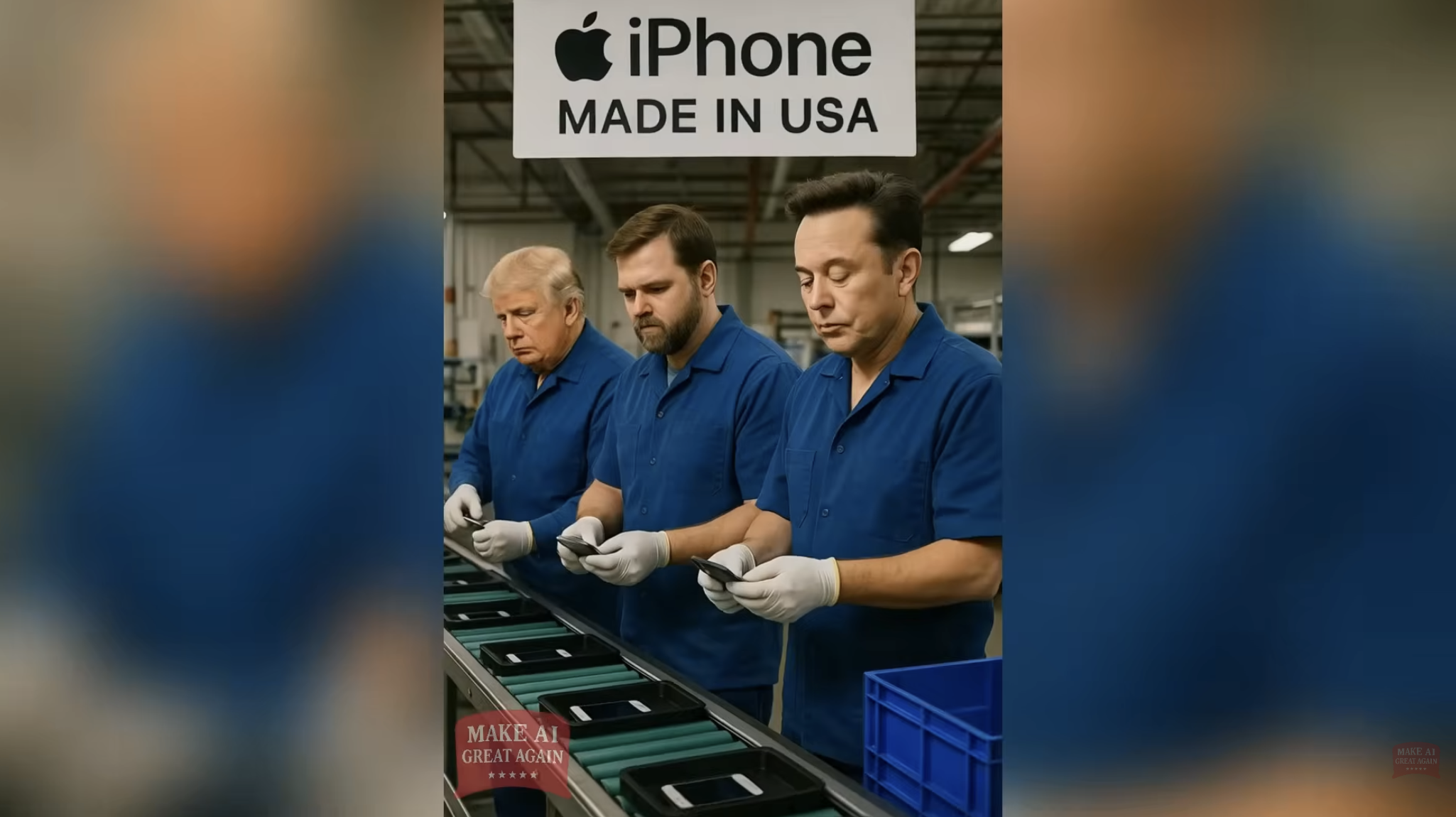
The genre originated on Chinese platforms. On 2 April 2025 Trump announced the Liberation Day tariffs. Within forty-eight hours, creators on Douyin and Weibo were generating satire of Trump, Vance, and Musk as sweatshop workers. Daily Dot named one, a TikTok creator going by Ben Lau, whose thirty-two-second clip became the most-cited single artifact in Western coverage. The Ankler identified the visual signature as Kling, the text-to-video model from China's Kuaishou. By 3 April a Russian user had posted one of the cluster's signature images to Pikabu, six days before the same imagery appeared on the YouTube channel that now claims it.
A dormant Australian channel reactivated and amplified. The channel at @MakeAiGreatAgain1 was created in November 2018, then published nothing for over six years until its first upload on 9 April 2025. Its metadata lists Australia, its upload times fit an Eastern-hemisphere operator, not United States prime time. The move is familiar from the influence-operations literature: acquire an aged account with accumulated trust signal and skip the cold start. The first viral sweatshop video on YouTube has seven comments. Seven. The virality was happening somewhere else.
The "officially recognized" line is a flip. When the channel cites Leavitt's briefing as White House recognition, it takes a moment in which the government, asked to attribute, declined, and sells the non-attribution as endorsement. The two typos, offically and recoginzed, survive every archived snapshot and even survive a late-2025 rewrite of the description. That is operator continuity. One hand, one voice, the same hand that cannot spell officially.
The audience is not where the content came from. I assumed the audience would be Chinese, because the content was. A sample of two hundred comments on the top ten videos says otherwise. Cyrillic runs about fourteen percent, Arabic about ten, Persian grew through 2025 in lockstep with the channel's mid-year pivot to Iran and the Strait of Hormuz. Chinese is one and a half percent. The chassis was built on Chinese-origin memes and consumed by a Russia-aligned, Iran-sympathetic, Muslim-majority Global South.
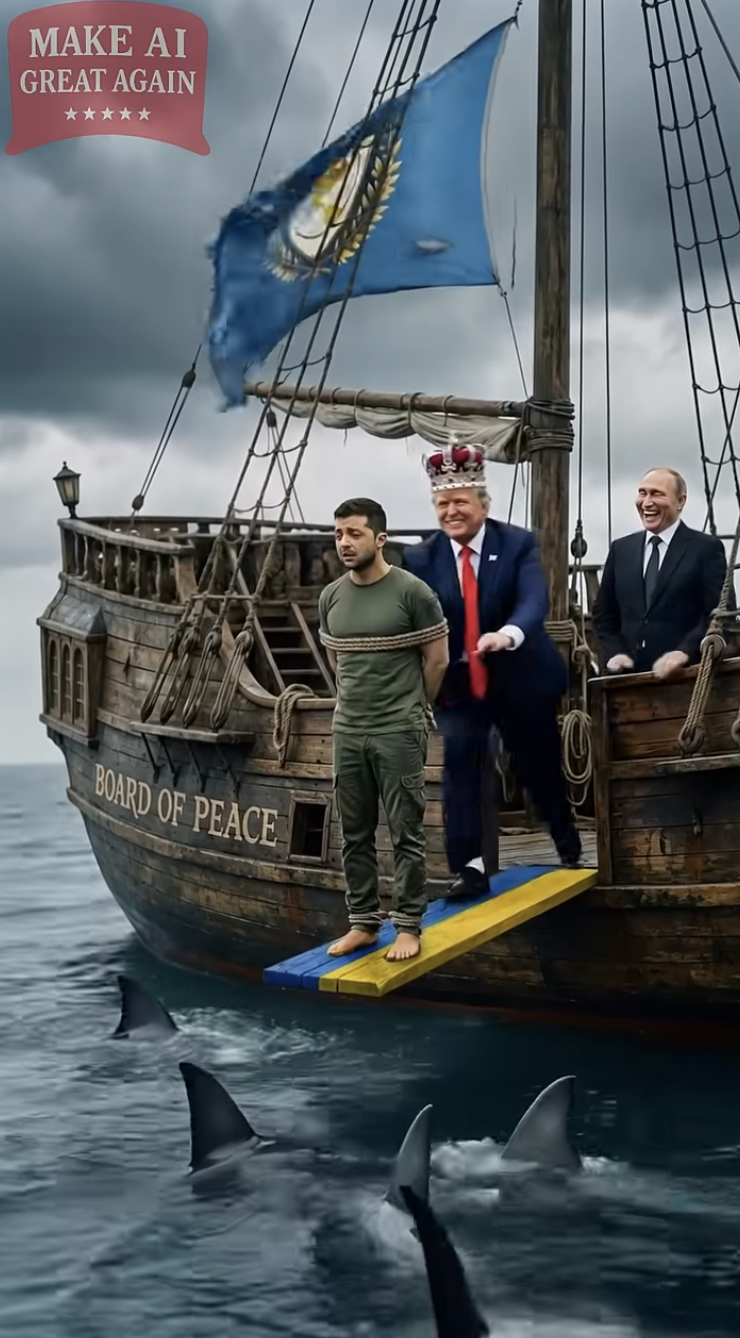
The bias is measurable. I coded fifteen videos from the TikTok sister account, 11.7 million views, end-to-end against a bias rubric with multimodal vision. Trump appears in twelve and is mocked in eleven of them, 91.7 percent negative. Putin appears in three and is dominant in all three. Xi appears in two and is never mocked. Khamenei appears in five and is sympathetic or resolute in four. The direction is unambiguous, the magnitude consistent with what the prior OSINT claims asserted but had not verified.
Threat intelligence has nothing. Microsoft's Threat Analysis Center, Meta's adversarial threat reports, Graphika, the DFRLab, NewsGuard's AI tracker. None of them name this cluster. A thing with 2.2 billion aggregated views does not appear in a single database built for exactly this work. That absence is itself the finding.
On the four-tier attribution ladder, the case lands at POSSIBLE. Possible foreign-influence alignment, possible monetization optimization, possible audience-driven evolution. Probably all three at once. Definitely none of them, alone, enough to call it a state operation. That is where the existing frameworks stop working.
The counter is to make it boring
The instinct is to remove it, and removal is the one move that cannot work here. You cannot pull the chassis off Western platforms without breaking the speech regime they run on. You cannot pull it off Eastern platforms because there it lives as protected state-aligned content. You cannot fact-check it, because it is declared as fiction, and you cannot debunk it, because there is nothing to debunk. What remains is to inoculate the audience before the chassis reaches it. Name the format, the pattern, and the recognition signals. Produce that on the same platforms, in the same formats, at the same pace. The Italians have a phrase I keep coming back to, saturazione negativa, negative saturation. The aim is not to take the chassis down. The aim is to make it recognizable, and a chassis that is recognizable is no longer surprising, and a chassis that is no longer surprising stops performing.
The detection side is not the bottleneck. Multimodal coordination methods published in 2025 already recover exactly this kind of cluster pattern, so the barrier is attention, not capability. The same goes for the threat-intelligence databases: their silence on a 2.2-billion-view cluster is not evidence it is harmless, it is evidence the schemas were written for the previous category, the one that pretends.
There will be a next case. It is cheaper to spin up a new chassis than to take an existing one down. When I started reading this one I thought I was investigating a Chinese propaganda channel. When I finished I had something else: a San Francisco AI startup's brand, reused by an Australian dormant channel, running Chinese-origin Kling videos, for a Russia-Iran-Arab Global South audience, with the White House Press Secretary refusing to attribute. The propagandist, in the old sense, is not in this picture. The propaganda, in every effect that matters, is.
Whoever watches laughs. Whoever analyzes recognizes a structure.